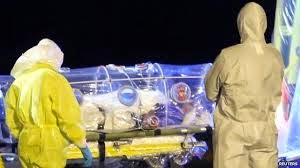
老向进来看看:中国研发的Ebola病治疗药物(Cure)到底靠谱不?

reine02

本站元老
VIP
注册
2012-02-27
消息
9,437
荣誉分数
2,120
声望点数
373
China’s first anti-Ebola drug JK-05 approved for production

By Press Trust of India @indiacom | August 29, 2014 6:07 PM

pills.jpg

Photo: Elitecity

Beijing, Aug 29: China’s first Ebola drug has recently obtained manufacturing approval from the General Department of Logistics of Chinese People’s Liberation Army (PLA) as a special medication for the PLA. The drug named “JK-05″ is the country’s first drug for the treatment of the deadly Ebola virus, and has been developed by the Institute of Microbiology Epidemiology under Academy of Military Medical Sciences.

The research team in the institute, headed by Professor Wang Hongquan, spent the last five years studying the prevention and treatment of the Ebola virus, the most virulent viral diseases known to humankind, according to the World Health Organization (WHO).

“JK-05 is a micro-molecular chemical, and its pharmacological mechanism is to selectively contain the RNA polymerase of the Ebola virus so as to inhibit virus replication,” said Professor Wang.

The drug JK-05 shows anti-Ebola activity during cell experiments and testing on animals, according to Wang’s study. It has also completed pre-clinical testing as well as a clinical safety evaluation.Wang stressed that the application of JK-05 for Ebola treatment is only allowed in emergency situations at the present time.

No Ebola cases have been reported in China, but over 1,300 people in West Africa have already lost their lives to the virus. There is no preventive vaccination or effective drug yet.


Modified Date: August 29, 2014 6:10 PM
 
估计胶囊里包的是板蓝根粉末 。。。
 
报道说这个“JK-05″不仅可以治疗Ebola病毒感染病人,还有预防作用。中国已经带去非洲上万剂了。

October 15, 2014 2:31 pm
China sends thousands of doses of anti-Ebola drug to Africa
Patti Waldmeir in Shanghai and Clive Cookson in London

714df48f-ea46-42c5-b853-f0693a25eae9.img
©Reuters
China is keen to cement its relationship with African countries by producing a drug to treat Ebola

China has sent thousands of doses of an experimental anti-Ebola drug developed by the Chinese military to Africa. The company manufacturing the drug said it plans to start human clinical trials there soon.

Sihuan Pharmaceutical, the private Chinese company that last week purchased the rights to commercialise jk-05 from a branch of the People’s Liberation Army (PLA), said it began manufacturing the drug after it was approved in August as a “special drug for military needs”.

The Chinese military has already sent enough of the drug to treat 10,000 people to west Africa, according to Dr Huo Caixia, associate president of research and development for Sihuan and head of its Beijing Aohe Drug Research Institute. Sihuan, whose founders are former military doctors, is part-owned by Morgan Stanley private equity funds.

The aim is to have the drug on hand in case any of the Chinese medical personnel sent to help out with the Ebola epidemic fall ill and for use in clinical trials which are now being designed, she said. It had not yet been used to treat any African patients, she said, but added that could not be ruled out.

Eager to cement its relationship with African countries that may be affected by the virus, China is stepping up its contributions to the fight against Ebola.

Beijing has sent 200 medical workers to the affected countries and pledged more than $35m in medical aid to Sierra Leone, Liberia, Guinea and the World Health Organisation. China told a World Bank crisis meeting in Washington last week its Ebola effort was already worth $200m altogether and would grow further.

China’s Academy of Military Medical Science, which according to its website was set up in 1951 by Mao Zedong to help China counter germ warfare waged by the US in North Korea, declined to comment on jk-05.

The large amount of the drug already present in Africa puts it on a scale with GlaxoSmithKline’s plans, announced in August, to manufacture 10,000 doses of an experimental Ebola vaccine being developed with the US National Institutes of Health. Human trials are under way in the US, UK and Mali to prove its safety.

The Chinese drug is being developed to treat Ebola and is not a vaccine. But it also has preventive uses, according to Dr Huo. She said it had passed cell and animal tests, but not human testing. Clinical trials would initially be done in Africa, she said, since no Chinese patients have yet contracted the disease.

Sihuan has released little technical information about jk-05, beyond saying that it “can selectively inhibit virus replication by inhibiting the RNA polymerase of the Ebola virus”. That means it blocks a key enzyme that the virus needs to replicate its genes.

A “small molecule” drug, jk-05 is a relatively simple chemical. This should make it possible to scale up production more quickly and less expensively than some of the other experimental drugs being fast-tracked for development in North America and Europe, which are biological products.

For instance the much discussed ZMapp from California-based Mapp Pharmaceutical, which was used to treat several US and European aid workers before supplies ran out, is a cocktail of three antibodies against the Ebola virus, produced from genetically engineered tobacco plants grown at a plant owned by Reynolds American in Kentucky.

The current level of approval for jk-05, issued by the Chinese military, would be sufficient for it to be used to treat military patients domestically, Dr Huo said, but she added: “If an Ebola outbreak happens in China, for sure it could be used not only for military patients but also for normal patients.”

She believes the drug could achieve full approval within months if an epidemic was looming.

With additional reporting by Zhang Yan in Shanghai and Andrew Ward in London
 
最后编辑:
估计胶囊里包的是板蓝根粉末 。。。
可能这个治疗药物是中国军方秘密研发的,报道说这个“JK-05″生产容易,成本低,好像比西方复杂的“鸡尾酒”配药法+转基因烟草种植提炼便宜太多。中国正在申请上市,这会断了西方医药公司发大财的机会。

德国鬼子发牢骚说中国已经往非洲运送了数以千计的JK-05 (ZT)

中国企业四环医药已经向非洲发送了数以千计的埃博拉试验性药物JK-05。汉堡一家热带病研究所的专家施密特-卡拉瑟特(Jonas Schmidt-Chanasit) 在接受德国之声采访时对此持保留态度,甚至感到难以置信。

  德国之声:您怎么看这种来自中国的埃博拉药物?

  施密特-卡拉瑟特:很难作出判断。除了从媒体上看到或者中方通告中写到的以外,我们没有任何关于这种药物的资料,没有任何可以自由获得的、在国际学术界获得认可的、通过质量鉴定的文献。因此,现在谈到的所有数据都很有疑问。虽然我们不能排除这是一种有效药物的可能性,但只要缺少可自由获取的可靠数据,就不能对此作出评估。

  中国过去在埃博拉病毒研究领域并不突出。美国、加拿大和欧洲明显更强。因此,如果在埃博拉病毒研究方面没有经验,也就说,如果这样的药物能不能用在人身上没有经过很好的检测,那么就存在疑问,必须非常小心。

  比如,我不相信这种药物在猴子身上进行了大规模动物试验,而这对检测其有效性和副作用非常重要。

  德国之声:据报道,数以千计的这种试验性药物已经运往危机地区......

  施密特-卡拉瑟特:对此应该提出质疑。不能在那里随便分发药品,而必须和世卫组织商量好。 据悉他们先将把药物给自己的人员,以应对紧急情况。这是可以的,但决不能把这种药物分给几内亚、赛拉利昂或者利比里亚人。这是绝对不行的,必须反对。因为没有数据证明这样做是允许的。

  德国之声:您指的是什么数据呢?

  施密特-卡拉瑟特:我们首先想看到动物试验的数据,这些数据应该是存在的。其它药物,比如已经经过临床阶段的Favipiravir和T-705就有这些数据。而对于JK-05,这是一个巨大的黑洞。我们对这种药物一无所知,因此决不能就这样用在人身上。这决不可以!

  德国之声:也就是说,中国的这种埃博拉药物JK-05完全没有公众可以获得的数据吗?

  施密特-卡拉瑟特:正是如此。这是 一种与中国军方联合开发的药物,我们没有关于这种药物通过些什么检测的数据,学术数据库中也没有。是进行了细胞培养呢,还是让猴子感染病毒,再用该药物进行了治疗,或者是在小白鼠身上进行了测试?所有这些我们都不知道。

  JK-05因此是一种完全不公开的,彻头彻尾的试验性药物。从伦理学上来说,决不能允许将它用在人身上。JK-05可以说是秘密研发的一种药物。在中国人宣布和军方一起研究出这种药物前,没有人知道它。

  这样的研发成果必须在高端杂志上发表,让学术界可以得到有关资料,这样才能作出评估。因此,在西非使用这种药物完全不切实际。


http://www.microsofttranslator.com/bv.aspx?ref=SERP&br=ro&mkt=en-US&dl=en&lp=DE_EN&a=http://www.dw.de/schmidt-chanasit-das-geht-überhaupt-nicht/a-18018733

Chinese Firm Says Its Drug Can Cure Ebola
Tuesday, 14 Oct 2014 08:12 AM

A Chinese drugmaker with close military ties is seeking fast-track approval for a drug that it says can cure Ebola, as China joins the race to help treat a deadly outbreak of a disease that has spread from Africa to the United States and Europe.

Sihuan Pharmaceutical Holdings Group Ltd has signed a tie-up with Chinese research Academy of Military Medical Sciences (AMMS) last week to help push the drug called JK-05 through the approval process in China and bring it to market. The drug, developed by the academy, is currently approved for emergency military use only.


"We believe that we can file to the Chinese Food and Drug Administration (CFDA) before the end of the year," Sihuan's chairman Che Fengsheng said during an investor call last week.

"They are looking at this very seriously... and we could get on the 'green light' track," he added.

Sihuan's drug is only one contender among a number of experimental cures worldwide to treat Ebola, although if successful it would be a huge boon for China's developing pharmaceutical sector and the country's soft power in Africa, an increasingly important partner for the world's No.2 economy.

The current outbreak, the worst on record of the disease, has killed more than 4,000 people, mostly in West Africa.

Che said one of Sihuan's strengths was its close military ties. The firm, which claims to be China's third largest prescription drugmaker, was originally a military scientific unit, which was spun off into its current form in 2001.

"We have a myriad of connections with the military medical science units and have developed lots of products in cooperation with the AMMS," Che said. AMMS is a research unit of the People's Liberation Army, China's armed forces.

Che pointed out that a Chinese vaccine against a SARS outbreak a decade ago, also developed by the military, was approved by the drug regulator rapidly after its application, signally that JK-05 could receive similar treatment.

"At that time the whole approval process, clinical components and the period after was cut right down," he said.

Officials at Sihuan, which is part-owned by Morgan Stanley, were not available for further comment on Tuesday.

TESTED ON MICE

China's Ebola cure bid still lags some way behind U.S.-developed ZMapp and TKM-Ebola, but Sihuan management said the drug has proven effective during animal testing on mice.

The drug, which AMMS has been studying and developing already for five years, is similar to Japanese flu drug favipiravir, developed by Fujifilm Holdings Corp, which has been used effectively to treat patients with Ebola.

ZMapp and TKM-Ebola have been tested on monkeys, which give a closer immune response to that of humans, and have been used to treat human patients with the disease.

JK-05 has not yet undergone clinical trials, but Sihuan management said the firm was actively working towards clinical tests of the drug, which could be shorter than normally required. The drug has also shown promise against diseases such as influenza and yellow fever.

Chinese military doctor Wang Hongquan, credited with inventing the drug, said on the investors call that JK-05 would first be used to treat Chinese nationals working in Africa with the disease, but treating non-Chinese would require further international approvals.

There are millions of Chinese nationals living in Africa, with around 10,000 in the worst affected countries - Sierra Leone, Guinea and Liberia.

JK-05 could also be used if Ebola spreads to China.

"We can't rule out the possibility that it will spread to Asia. Particularly in China now we have lots of connections with different international cities and many people coming and going across our borders," he said on the call.

Company management and analysts said an Ebola outbreak in China would further speed up the approval process and development of the drug.

"It is highly likely the Ebola indication could be approved very quickly if Ebola was to spread to China," said Deutsche Bank analyst Jack Hu in an analyst note on Sunday.
© 2014 Thomson/Reuters. All rights reserved.

http://www.newsmaxhealth.com/Health-News/ebola-sihuan-jk-05-cure/2014/10/14/id/600526/
 
最后编辑:
用病毒的iRNA(contain the RNA polymerase of the Ebola virus),原理上可行,但是有成功上市的吗

how about this;

Posted by Dirk Haussecker at Wednesday, October 08, 2014 14 comments:

Labels: ARC520, Arrowhead Research, HBV, Hong Kong, phase IIa, Tekmira, TKM-HBV
Tuesday, October 7, 2014
Developing Aerosolized TKM-EBOLA as Airborne Transmission of Ebola Likely[/paste:font]


Knowing how a virus is spread, also from a cell biology point-of-view, is critical to curtailing its spread and devising effective treatment strategies.

According to the World Health Organization (WHO), the first symptoms of an Ebola infection are ‘the sudden onset of fever fatigue, muscle pain, headache and sore throat’ (emphasis mine). Then also consider the following:
1)Ebola once killed a number of monkeys are apparently spreading through the ventilation system in Reston, VA;
2)A nurse became infected in a reference hospital for infectious diseases in Spaindespite the protective clothing she was wearing and her limited contacts with the infected patients she was looking after (taking temperatures twice);
3)A single pregnant woman in Liberia infected atleast 10 people helping her as she came down with Ebola;
4)Ebola virus can infect numerous cell types in the body (frequently cited are the liver, endothelial cells, and phagocytic cells) and is found in high amounts inthe respiratory tract in infected pigs with the virus spreading readily to cohabiting pigs in the colony;
If you still believe in the narrative, even propagated byotherwise fairly reliable sources such as the CDC, that Ebola is only transmitted by direct contact with body fluids, then you should start considering airborne transmission as a main route the infection is spread.

After all, since when are cough droplets not a bodily fluid?
If airborne is indeed an important route of transmission, this would not only raise concerns that just like in avian flu, a few mutations in the virus adapting it to better latch on to the human respiratory tract could further catalyze the spread of the virus, but would also mean that treating it at the respiratory stage could both prevent the virus from fully entering the body as well as limit its spread from person-to-person.

Enter TKM-EBOLA

An RNAi viral knockdown approach in the respiratory epithelium should obviously be able to achieve that goal. All that would be required is to take the same RNAi triggers now part of the intravenous TKM-EBOLA formulation and incorporate it in something amenable for respiratory delivery.

Back in 2011, Tekmira revealed that it was developing aerosolized liposomal nanoparticles (LNPs) to deliver RNAi triggers to the respiratory epithelium. A key challenge was to find formulations that not only could successfully transfect respiratory epithelial cells, but also withstand the shear forces involved in nebulizing them. Initial structural and tissue culture RNAi knockdown results showed that this can be achieved.

The development was seemingly halted at the rodent preclinical stage as the company had to save financial resources as it was fighting off Alnylam in a trade secret case. After coming out on top of the litigation in November 2012, the company was then able to once again expand the development of its LNP-based nucleic acid delivery technology, in addition to churning out clinical development candidates (e.g. the important HBV candidate to be revealed next week).
Given that the company established a separate biodefense unit headed by the ‘LNP-brain’ of the company, now Chief-Technology-Officer Ian MacLachlan, I would not be surprised if LNP nebulization was part of that effort with the next goal of showing efficacy in monkeys.


Such reformulation of TKM-EBOLA is just another example of the versatility of RNA Therapeutics, just as is the ability to rapidly adjust and optimize the medicine as the virus evolves (note: this is e.g. not possible with antibodies). It also adds to the importance of scaling up the supply of the RNAi trigger now should airborne be recognized as a major route of transmission.

Long-term, such developments would obviously benefit the development of LNP-delivered RNA Therapeutics for the lung epithelium in general, including mRNA delivery (e.g. for Cystic Fibrosis) and a universal RNAi agent against flu.

Posted by Dirk Haussecker at Tuesday, October 07, 2014 7 comments:

Labels: airborne transmission, Ebola, nebulized LNP, Tekmira, TKM-Ebola
 
最后编辑:
德国人说的意思简化后就:你们TMD把德国兄弟当小白鼠。
到底能不能把急重病人当小白?这是一个问题。
 
德国人说的意思简化后就:你们TMD把德国兄弟当小白鼠。
到底能不能把急重病人当小白?这是一个问题。

美国就是这样,宁看非洲那里死人,也不把病人做试验。死两百的时候就说有药,后来死了两千
 
美国就是这样,宁看非洲那里死人,也不把病人做试验。死两百的时候就说有药,后来死了两千
宁可人死,不能但伦理责任。
 
哈哈,老向还挺忙,呼唤声此起彼伏,,,,:monster::monster:
 
据记者从四环医药了解到,jk-05能通过抑制病毒的RNA聚合酶,从而实现抑制病毒复制的目的,因此,它不仅可以用来抗埃博拉病毒,对黄热病病毒、沙粒病毒、布尼亚病毒等RNA病毒均有抑制作用。为此,四环医药准备将其开发为一种广谱抗病毒药物,以满足市场对病毒感染及流行的预防及治疗类药物的需求。

  不过也有业内人士向本报记者表示,jk-05在短时间内可能还无法面市。中国一家大型制药公司的工作人员向记者表示,“在一款新药通过审批前,需要经过四轮的临床试验和伦理委员会审查等诸多环节,通常需要3到10年的时间才能面市,参考‘非典’时期药监局开通‘快速通道’的方法,实验药获批进入Ⅰ期临床研究也需要6个月到1年左右的时间。”

  同时,业内人士向记者表示,jk-05进入审批阶段还要面临一个问题,那就是目前中国并没有受埃博拉病毒的患者,因此无法在中国进行人体临床实验。据记者了解,jk-05的研发稍落后于在其他类似药物,目前已完成小鼠实验,而美国马普生物公司所研制ZMapp和加拿大特克米拉制药公司研制的TKM-埃博拉已完成了在猴子身上的实验。对此,四环医药方面表示,“将与军科院共同努力,尽快将该药物推出市场,实现产业化。”据报道,jk-05目前已获得“军队特需药物批件”,并运往非洲疫区用于储备及临床实验准备
 
非洲兄弟与猴子是一个档次的实验对象?!?:huairen:
看出这里面的意思了。中国记者就是强。就是强。
 
这么神速?效果如何?希望向咱们的高铁,轻轨一样V5。
 
我鱉天朝,高潮不断!
 
后退
顶部
首页 论坛
消息
我的