Vaccine prevents 98.9% of COVID deaths, Israel’s Health Ministry data shows
Officials hail ‘dramatically’ effective Pfizer shots; two weeks after second dose, vaccine also 99.2% protective against serious illness, reduces chance of hospitalization by 98.9%
By
TOI STAFF20 February 2021, 8:33 pm
1
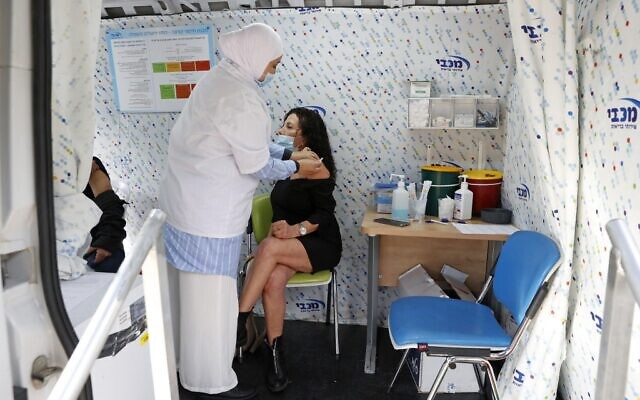
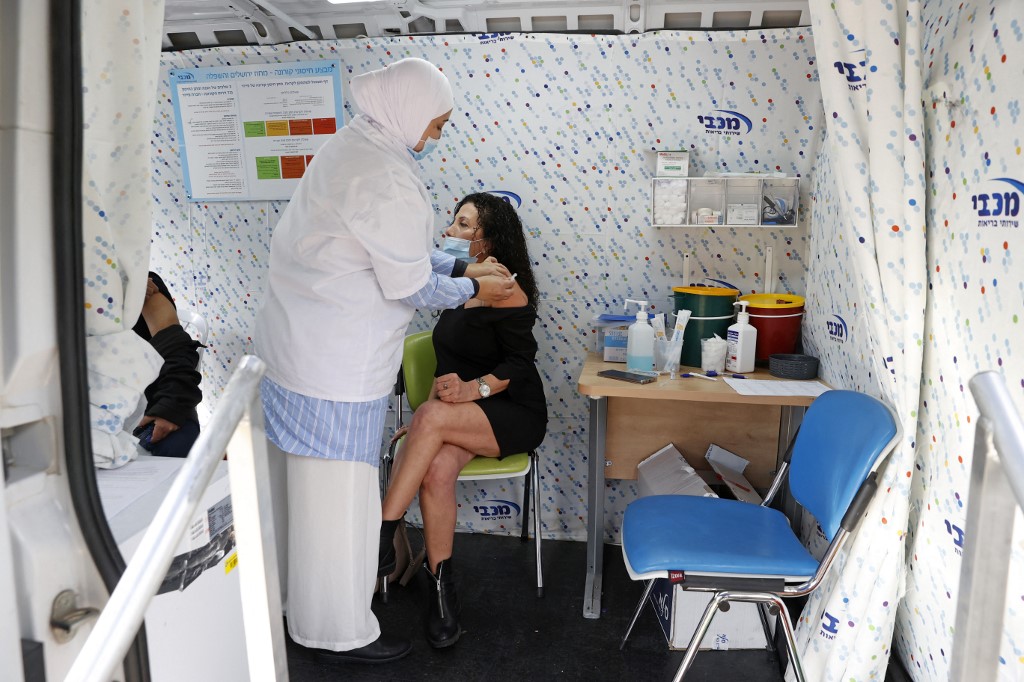
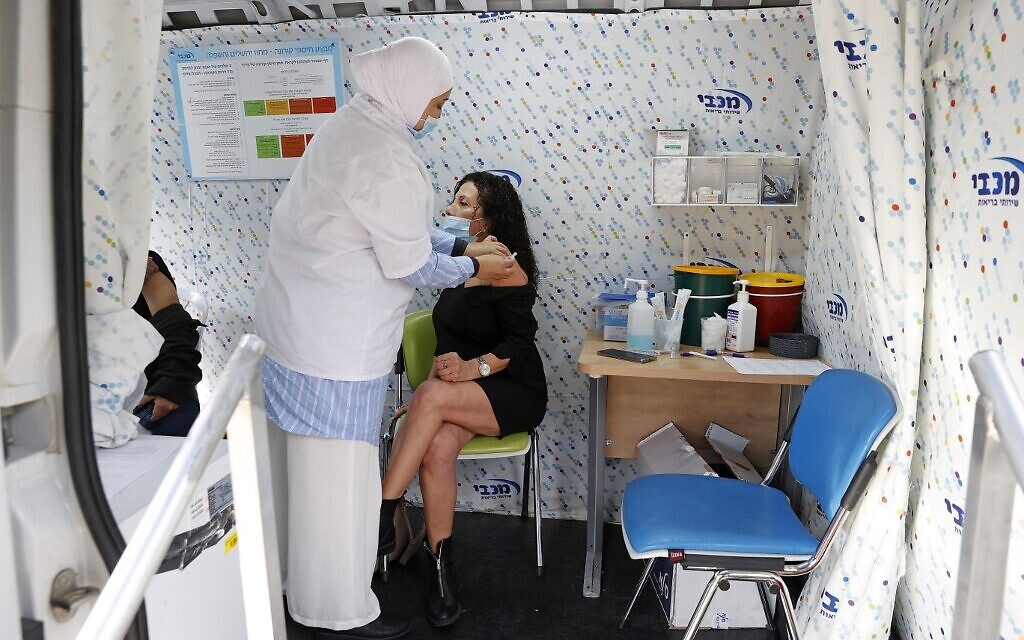
A health worker of the Maccabi Healthcare Services administers a dose of Pfizer-BioNtech vaccine to a woman inside a van in Tel Aviv-Jaffa, on February 16, 2021. (JACK GUEZ / AFP)
Israel’s Health Ministry said Saturday that coronavirus vaccines were “dramatically” effective and the latest data shows the shots were
98.9% effective at preventing death caused by COVID-19.
“The vaccine dramatically reduces serious illness and death and you can see this influence in our morbidity statistics,” said Health Ministry Director-General Chezy Levy.
According to the data released by the ministry, the vaccine is also
99.2% protective against serious illness, reduces morbidity by 95.8% and decreases the chance of hospitalization by 98.9%.
The data represents Israelis who have received both doses of the vaccine, 14 days after their second dose, versus people who have not received any inoculation. The data is representative of findings up to February 13, the Health Ministry said.
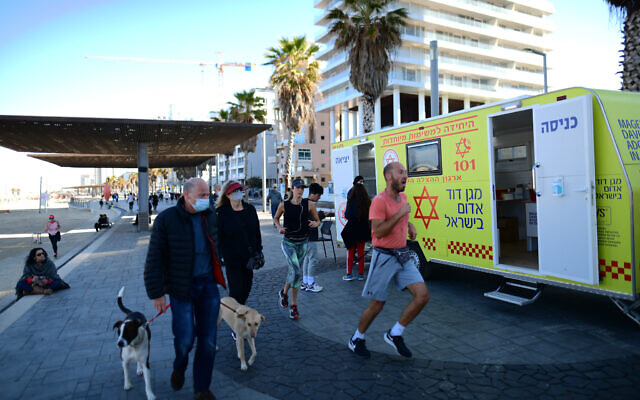
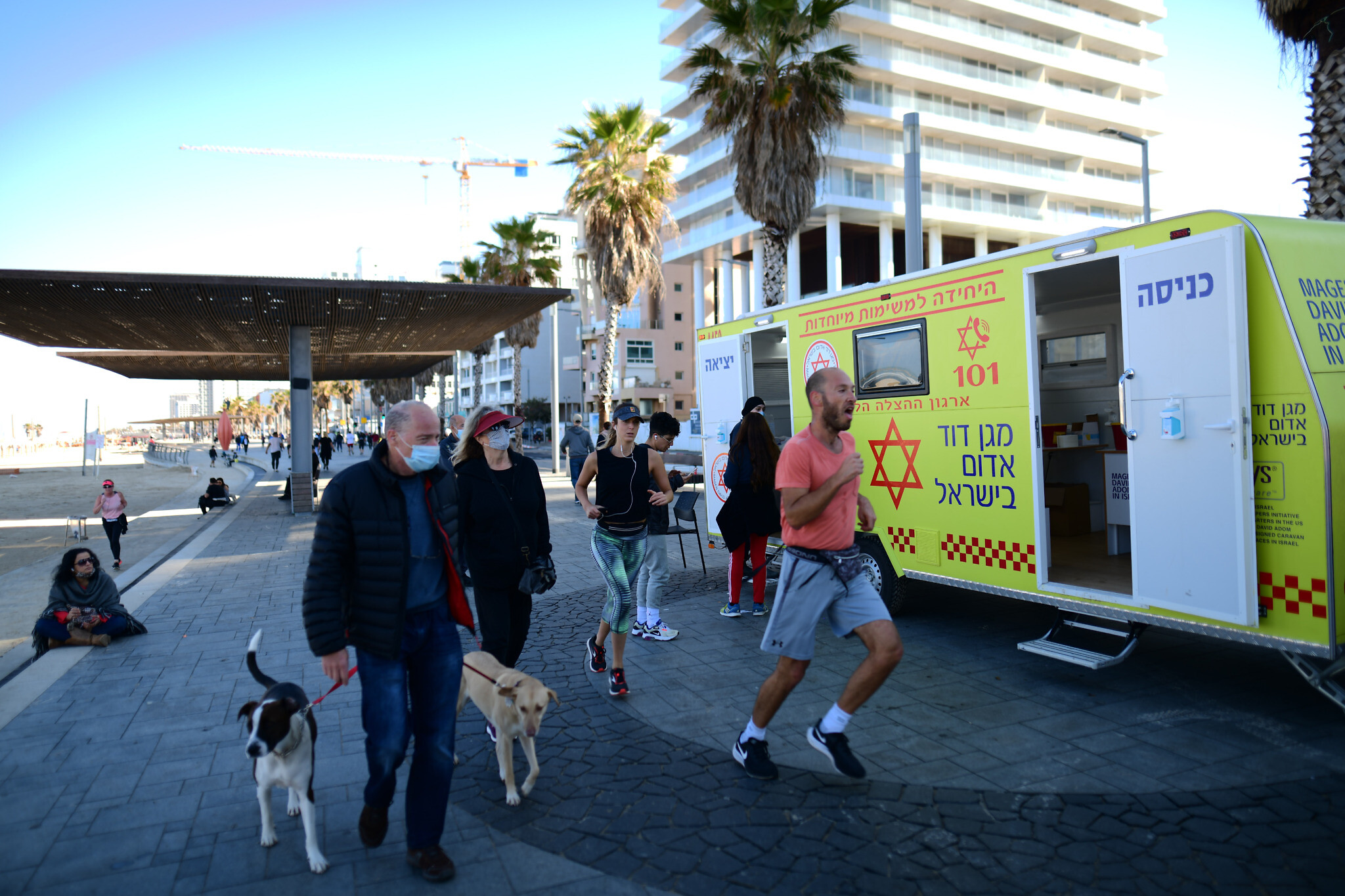
Israelis walk near a COVID-19 mobile vaccine station on the beach in Tel Aviv, February 20, 2021. (Tomer Neuberg/Flash90)
So far, 4,250,643 have received at least one dose, while 2,881,825 have received both shots out of the country’s population of about 9 million. Around 3 million Israelis are not currently eligible to be vaccinated, including those younger than 16 and people who have recovered from COVID-19, among others.
While the Health Ministry figures did not specify, Israel has been vaccinating almost exclusively with the Pfizer-BioNTech vaccine.
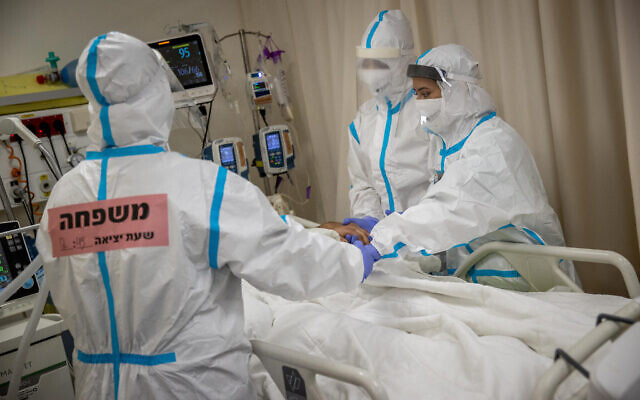
Family members wearing safety gear visit a relative at the coronavirus ward of Shaare Zedek hospital in Jerusalem on February 3, 2021 (Yonatan Sindel/Flash90)
The nationwide data is even more optimistic than the results of studies released in recent days by Israel’s HMOs.
A massive study by Israel’s largest health provider
released Sunday indicated that the vaccine was 94 percent effective in preventing symptomatic COVID-19, and 92% effective in averting serious cases of the disease.
The Health Ministry findings also follow results nine days ago by the Maccabi HMO, which
reported zero deaths among 523,000 people a week or more after their second vaccination shot.
“Thanks to Israel’s strong health system that has allowed us to vaccinate an unprecedented wide percentage of the population, and our epidemiological tracking facilities, we are the first country in the world that can show the effect of the vaccine in the real clinical world,” said Levy.
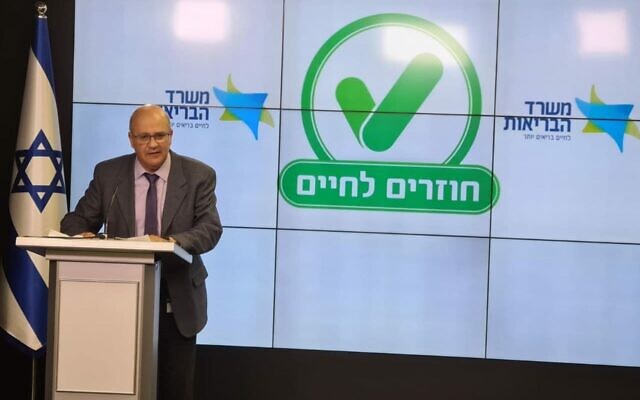
Health Ministry Director-General Chezy Levy during the announcement of the “Green Pass” certification on February 18, 2021 (Health Ministry)
“Our aim is to continue to vaccinate everybody 16 and older, and when the time comes, those under 16 also, to reach the widest possible coverage of the population that will allow us to return to normal life, which we all long for,” he said.
The vaccine has not yet been approved for children under 16, although Israel has vaccinated dozens who suffer specific COVID-19 risk factors.
No serious side effects were reported.
A Tuesday poll found that despite a sharp increase in infections among children,
only 41 percent of Israeli parents said they intend to vaccinate their kids once inoculations become available for those under 16. The poll, conducted by the Rushinek research institute, found that 29% of parents don’t plan on vaccinating their 6- to 15-year-olds, 30% are unsure, and 41% plan to do so, Channel 13 reported.
The data release comes as Israel was
set to roll back some of the major restrictions imposed in late December as part of a third lockdown aimed at curbing the spread of COVID-19, with stores, gyms, hotels and other venues allowed to reopen on Sunday morning.
Street-front shops, malls, markets, museums, and libraries will be open to all Israelis. But only those who have been vaccinated or have recovered from COVID-19 will be able to use gyms, enter sporting and culture events, hotels, and swimming pools.
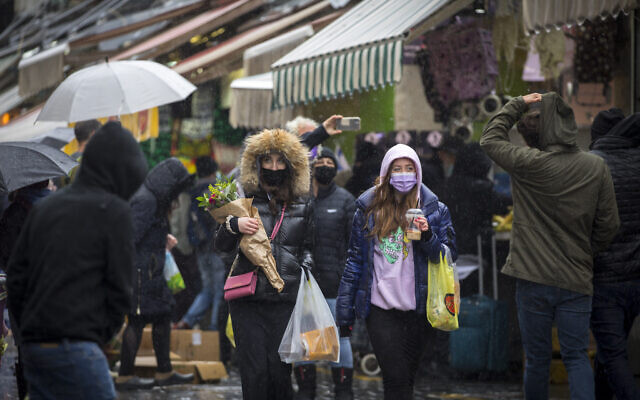
People wearing face masks take cover from the rain as they shop for groceries at the Mahane Yehuda Market in Jerusalem, on February 19, 2021. (Olivier Fitoussi/Flash90)
The Health Ministry on Thursday
launched the long-awaited “Green Pass” certificate which will enable those vaccinated or recovered from the coronavirus to take part in various activities.
To be allowed to open Sunday, relevant businesses must scan people for the pass and only accept those carrying it.
The Health Ministry said Friday there were 49,867 active virus cases, including over 4,000 infections diagnosed on Thursday, bringing the total since the start of the pandemic to 743,814. The test positivity rate on Thursday was 6.2%.
There were 858 serious cases, including 295 people on ventilators. The death toll stood at 5,521.
Officials hail 'dramatically' effective Pfizer shots; two weeks after second dose, vaccine also 99.2% protective against serious illness, reduces chance of hospitalization by 98.9%
www.timesofisrael.com
以色列疫苗最新数据
来源:
sourbaby 于 2021-03-09 15:21:04
以色列时报2月20日报道:根据该国截止2月13日的数据,2881825 (2百80万人)已经接种了辉瑞疫苗第二针。他们发现对于接种了
辉瑞疫苗第二针超过14天的人,疫苗对于新冠死亡的保护率是98.9%,重症保护率99.2%,并减少98.9%的住院几率。
2月14号以色列时报曾经报道以色列另一个更大范围的研究表明辉瑞疫苗对于有症状新冠的保护率是94%,重症保护率92%.
2月11号,他们报道过另一个研究,523,000人在第二针疫苗一周之后, 只有544个感染新冠,0死亡,15个住院,4个重症。
Officials hail 'dramatically' effective Pfizer shots; two weeks after second dose, vaccine also 99.2% protective against serious illness, reduces chance of hospitalization by 98.9%
www.timesofisrael.com

bbs.wenxuecity.com